0
-
An empty cart
You have no item in your shopping cart

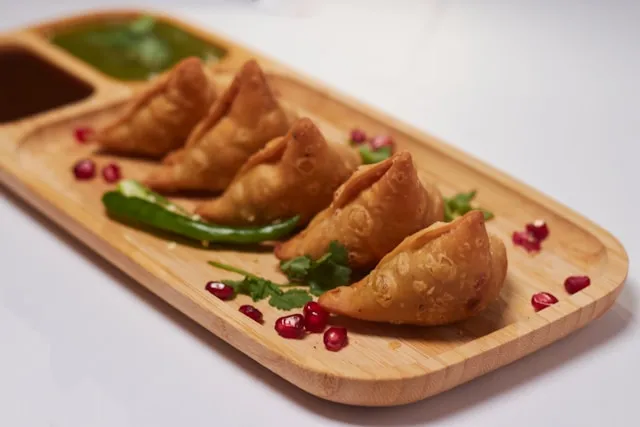
If you are wondering exactly, What is a samosa? you are not alone. To learn everything about samosa, you first need to know that it is a world-famous, deeply delicious savory pastry. A traditional samosa is a deeply satisfying, triangle-shaped snack that is extremely crispy on the outside and very soft on the inside. The outer shell is made from a simple, plain dough of all-purpose flour, water, and a little bit of oil or ghee, often flavored with tiny carom seeds.
Inside this crunchy golden shell, you will find a warm, highly spiced filling. The most common and popular filling in the world is made from boiled, softly mashed potatoes mixed with green peas, fresh green chilies, and a beautiful blend of strong Indian spices like cumin, coriander, and garam masala. When you bite into it, you get a loud, satisfying crunch followed by a soft, flavorful, and slightly spicy center. It is a legendary street food in India, Pakistan, and many other parts of South Asia. Today, you can find this amazing snack in almost every Indian restaurant across the entire globe. People absolutely love it because it is cheap, very filling, and very easy to eat with your hands while walking. Whether you are at a grand wedding, a small family party, or just walking down a busy city street, this golden-brown pastry is always a massive crowd favorite that brings immense joy to anyone who eats it.
When people ask, Where did samosas originate? many are very surprised to learn that this famous Indian snack did not actually start in India. The rich history of this golden pastry goes all the way back to the ancient Middle East and Central Asia. The original name was “samsa” or “sanbusak,” which simply meant a triangular pastry in ancient Persian languages. Many hundreds of years ago, traveling merchants and traders moving along the famous Silk Road needed fast food that was easy to carry on long journeys. They created these small, meat-filled pastries to eat around their campfires at night. During the 13th and 14th centuries, these traders brought the snack into the Indian subcontinent. When it reached India, the recipe completely changed. Instead of using only heavy meat, local Indian cooks started filling the pastry with fresh vegetables, especially spiced potatoes, to perfectly suit the large vegetarian population. Royal chefs in the ancient Delhi Sultanate absolutely loved this new snack and started serving it to mighty kings and noblemen. Over many centuries, the recipe spread across every single state in India, with each region adding its own special local spices and flavors. Today, its incredible history proves how a simple travel food from the dry Middle East transformed into the ultimate Indian street food. Understanding its grand journey from ancient Persian deserts to modern Indian cities makes eating this snack even more special. It is a perfect example of how different cultures can share and improve a recipe over time.
A very common question for new eaters is, Is a samosa vegetarian? Most of the time, the answer is a big yes. The most classic and widely eaten version of this street food is entirely vegetarian, filled only with spiced potatoes, green peas, onions, and sometimes small pieces of paneer (Indian cheese) or sweet cashew nuts. However, there are non-vegetarian versions available, often filled with minced lamb, chicken, or beef, which are very popular in Middle Eastern and Pakistani cultures. When we look closely at the Nutrition Facts, it is important to know that this is a very rich, heavy snack. Because the outer shell is made of refined white flour and the inside is stuffed with starchy potatoes, it is quite high in complex carbohydrates. These carbohydrates give you a very fast, powerful boost of energy. It also contains a moderate amount of plant-based protein from the green peas and a significant amount of dietary fat because of the hot oil cooking process. The Nutrition Facts also show some good vitamins; you get a decent amount of Vitamin C and potassium from the fresh potatoes, and healthy antioxidants from strong spices like turmeric and cumin. While it is not considered a low-fat diet food, eating a vegetarian potato pastry provides your body with rich, filling calories that quickly satisfy deep hunger. Vegans can also safely enjoy the potato version, provided the outer dough is made with vegetable oil instead of dairy butter or ghee. Always ask the chef about the exact ingredients if you have strict dietary rules.
People who want to cook at home always ask, Is a samosa fried or baked? Traditionally, to get that perfect, bubbly, and incredibly crunchy crust, it must be deep-fried in hot oil. However, because many people want much healthier options today, baking or air-frying them has become extremely popular. If you want to know exactly how to make them in your own kitchen, the process is fun and very rewarding. First, you start by making the dough. You mix all-purpose flour with a little salt, some carom seeds, and a few spoons of oil. You slowly add water and knead it until it forms a tight, firm dough. Next, you prepare the filling. Boil some large potatoes until they are soft, peel them, and mash them into small chunks. In a hot pan, cook the mashed potatoes with green peas, chopped green chilies, grated ginger, and dry spices like cumin powder, coriander powder, and garam masala. To assemble them, roll a small ball of dough into a flat circle, cut the circle perfectly in half, and fold one half into the shape of a cone. Stuff the spicy potato filling inside the cone, use a little water to seal the edges tightly, and then deep-fry them in medium-hot oil until they turn a beautiful golden brown. If you prefer the baked method, you simply brush the raw cones with a little bit of oil and put them in a hot oven at 375°F (190°C) for about 25 minutes. Both methods give you a wonderfully delicious, comforting snack.
If you are strictly watching your diet, you might be asking, How many calories are in a samosa? Because it is a deep-fried pastry fully filled with starchy potatoes, it is definitely an energy-dense food. Generally, the calories in 1 samosa of an average, medium size are about 250 to 300 calories. This exact number can easily change depending on exactly how much oil the flour dough absorbs during the frying process and exactly how large the pastry is made. The outer flour shell alone holds a lot of the fat calories, while the soft potato filling provides the heavy carbohydrate calories. If you are very hungry and decide to eat a pair of them, the 2 samosa calories will easily equal about 500 to 600 calories. This means eating just two of these delicious snacks is almost the exact same amount of calories as eating a full, regular meal. If you want to heavily reduce the high calories in 1 samosa, choosing the baked or air-fried version is a very smart and healthy idea. Baking them can drop the calorie count down to just 150 to 180 calories each, simply because you use much less cooking oil. While they are very high in calories, they are totally fine to enjoy as an occasional treat. Knowing the true 2 samosa calories helps you easily balance the rest of your meals for the day. Moderation is always the best approach. You can easily enjoy the rich taste and satisfying crunch without feeling guilty, as long as you account for these calories in your daily food tracking.
To get the ultimate flavor experience, you might wonder, What sauce goes with samosas? Eating this dry pastry all by itself is considered a big mistake in Indian culture. They are entirely meant to be dipped! The two absolute classic sauces, officially known as chutneys, are what they are best with. The first is a bright green mint and coriander chutney. This amazing sauce is slightly spicy, very fresh, and has a sharp, tangy taste from added lemon juice, which perfectly cuts through the heavy oil of the fried pastry. The second famous sauce is a dark brown, sweet and sour tamarind chutney. This thick, sticky sauce is made from boiling real tamarind fruit with brown sugar and ginger, creating a deeply sweet flavor that perfectly balances the spicy potato filling. But sauces are not the only things they are best with. For a truly authentic street-food experience, you absolutely must eat them while drinking a steaming hot cup of Indian masala chai (spiced milk tea). The magical combination of hot tea and the spicy, crunchy snack is a favorite evening tradition for millions of people. Another highly amazing way to eat them is by making a “samosa chaat.” In this massively popular dish, you crush the warm pastry on a plate and cover it completely with hot chickpea curry, cool yogurt, and both the sweet and spicy sauces. It is a massive flavor explosion. Whether you dip them in a simple green sauce or cover them in curry, finding the perfect pairing elevates this humble snack into a truly gourmet experience.
If you bought too many and have cold leftovers in the fridge, you will definitely need to know, How do you reheat samosas? Reheating them the exactly right way is extremely important if you want to keep that magical, crispy crunch. The absolute worst thing you can possibly do is put them in the microwave. If you microwave a fried pastry, the natural water inside the potato filling quickly turns into hot steam, making the outer flour shell very soft, wet, and terribly soggy. Instead, the absolute best way to reheat them is by using a conventional oven, a toaster oven, or a modern air fryer. First, preheat your oven or air fryer to a hot 350°F (175°C). Place your cold snacks on a wire rack or a metal baking sheet. Let them bake for about 8 to 10 minutes. The dry, continuously circulating heat of the oven will slowly warm up the thick potato center while actively pulling the leftover cooking oil back to the surface, making the outside skin wonderfully crispy once again. If you do not have an oven, you can also use a dry, heavy frying pan directly on your stove. Put the heat on very low, place the pastry in the completely dry pan, and slowly warm it, turning it over every few minutes until it is hot and crunchy. Proper reheating ensures that your food tastes just as fresh, hot, and crispy as the exact moment it was first cooked. Taking those few extra minutes makes a huge difference, because nobody likes a soggy snack!
For busy people who love meal prepping, a great and helpful question to ask is, Can samosas be frozen? The answer is a very big yes! In fact, they are one of the absolute best appetizers in the entire world to freeze for later use. You can successfully freeze them either completely raw or half-cooked. If you make a large batch of raw ones at home, do not put them all in a plastic bag immediately, because the wet dough will stick together into a giant, ruined mess. Instead, lay the freshly stuffed, raw pastries gently on a flat baking tray so they are not touching each other at all. Put the entire tray into the deep freezer for about two hours until they become completely hard like rocks. Once they are frozen solid, you can safely transfer them into a large plastic ziplock bag or a tight, sealed container. They will easily last in the deep freeze for up to three or four full months without losing any of their great flavor. When you are finally ready to eat them, you must not let them thaw out on the kitchen counter. If you thaw them, the dough will become wet and tear open. You should drop the completely frozen pastries directly into the hot frying oil, or put them straight into a hot baking oven, just adding a few extra minutes to the total cooking time. Having a secret stash of these frozen treats means you are always prepared to serve a warm, comforting appetizer at a moment’s notice without doing any hard work.