0
-
An empty cart
You have no item in your shopping cart

The term carbohydrate was coined in the mid-19th century. The word comes from the French “hydrate de carbone,” because early chemical analysis suggested their formula was carbon plus water.
However, the understanding of sugars and starches goes back much further. In 1857, French physiologist Claude Bernard discovered glycogen, the form of sugar stored in the liver, which was a massive breakthrough in understanding how the body processes energy. Before this, in the 1840s, German chemist Justus von Liebig had classified food into three main groups: proteins, fats, and carbohydrates, establishing the foundation of modern nutritional science.
The history of human carbohydrate consumption is effectively the history of civilization.
The controversy stems from the obesity and Type 2 diabetes epidemics. As consumption of highly processed carbohydrates and added sugars peaked in the late 20th century, metabolic diseases skyrocketed.
This led to a pendulum swing in the opposite direction. Diets like Atkins, Paleo, and Ketogenic argued that humans are not evolutionarily designed to eat high amounts of grains and starches. While there is truth to the dangers of refined sugar, the “carb-phobia” often unfairly targets healthy, whole food carbohydrates like fruits, legumes, and whole grains, which have sustained healthy populations for millennia.
At a chemical level, carbohydrates are molecules made of carbon, hydrogen, and oxygen. They are one of the three main macronutrients (along with protein and fat) that the body requires. Their primary job is to provide the body with glucose, which is converted into energy to support bodily functions and physical activity.
Carbohydrates are generally categorized by their chemical structure and how quickly they are digested:
This distinction is vital for a healthy diet.
The Glycemic Index (GI) is a ranking system (0 to 100) that indicates how quickly a specific carbohydrate food raises blood sugar levels.
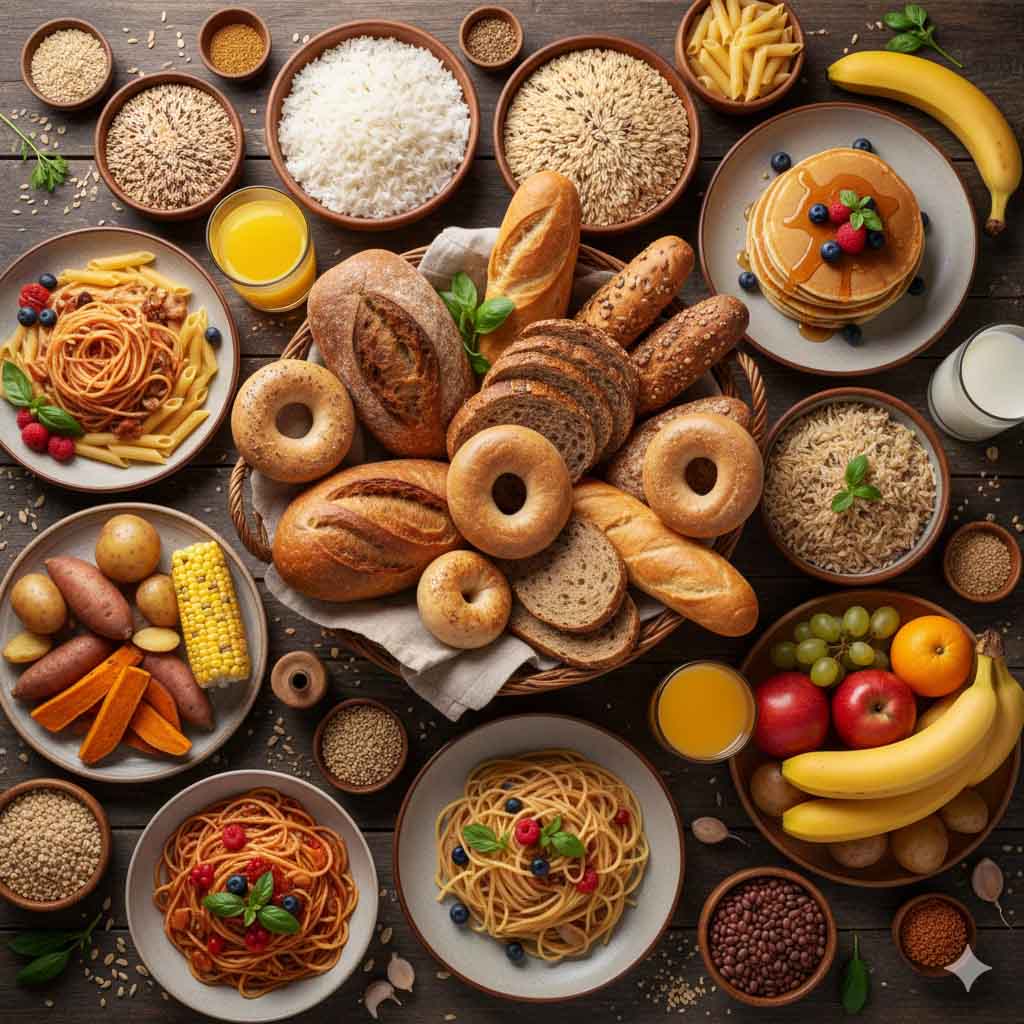
If you are looking to fuel your body, this is your go-to healthy carbohydrates food list:
1. Whole Grains
Whole grains retain the bran and germ, offering high fiber and B vitamins.
2. Legumes (Beans and Pulses)
These are arguably the healthiest carbohydrate source due to their high protein and fiber content.
3. Starchy Vegetables
These provide energy along with essential vitamins.
Fruits technically contain fructose (a simple sugar), but they act more like complex carbohydrates in the body because of their fiber and water content. The fiber slows down the absorption of sugar.
These are primarily refined carbohydrates or “empty calories.” They provide energy but very little nutritional value.
Despite the popularity of low-carb diets, carbohydrates play critical roles:
Carbohydrates alone do not cause weight gain; calorie surplus causes weight gain. However, the type of carbohydrate matters immensely.
Refined carbs (sugar, white flour) are low in satiety. You can eat 1000 calories of cookies and still feel hungry because they lack volume and fiber, leading to overeating. Conversely, it is very difficult to overeat 1000 calories of boiled potatoes or broccoli.
The “carb-insulin model” of obesity suggests that high insulin levels caused by sugary foods drive fat storage, which is why low-carb diets can be effective for weight loss.
Type 2 diabetes is characterized by insulin resistance. When you eat high-GI carbs, the pancreas pumps out insulin to lower blood sugar. Over time, if the diet is consistently high in sugar, cells stop responding to insulin.
Diabetics do not need to avoid carbs entirely, but they must manage carbohydrate counting carefully and prioritize low-glycemic, high-fiber foods to prevent dangerous blood sugar spikes.
There is no single definition, but generally:
Carb cycling is a dietary protocol often used by athletes. It involves alternating between high-carb days and low-carb days.
In the context of a standard diet, no. All fruits offer vitamins. However, for those on strict low-carb or Keto plans, high-sugar fruits like grapes, mangoes, and bananas are often avoided in favor of berries. Dried fruits (like raisins) are very calorie-dense and high in sugar by volume, so they should be eaten with caution.
The recommended daily intake is about 25 grams for women and 38 grams for men. Most modern diets fail to reach half this amount. Increasing your intake of legumes, whole grains, and vegetables is the best way to hit this target.
You will often see this term on protein bars and diet products.
Net Carbs = Total Carbohydrates – Fiber – Sugar Alcohols.
Because the body does not digest fiber or certain sugar alcohols (like erythritol), they don’t impact blood sugar in the same way. People on Keto count Net Carbs rather than total carbs.
To summarize this guide, here is a quick reference table for making better choices at the grocery store.
| Category | Eat These (Complex/Whole) | Avoid These (Simple/Refined) |
|---|---|---|
| Grains | Oats, Quinoa, Brown Rice, Barley | White Rice, Sugary Cereal, Instant Oatmeal |
| Bread | 100% Whole Wheat, Ezekiel Bread, Rye | White Bread, Bagels, Pizza Dough |
| Vegetables | Spinach, Broccoli, Sweet Potato, Carrots | Fried Potatoes (French Fries), Corn Chips |
| Fruits | Blueberries, Apples, Oranges | Canned Fruit in Syrup, Fruit Juice |
| Snacks | Nuts, Popcorn (air-popped), Hummus | Cookies, Crackers, Pretzels, Candy |
| Sweeteners | Stevia, Raw Honey (limited), Maple Syrup | High Fructose Corn Syrup, White Table Sugar |
Carbohydrates are not the enemy; they are a tool. From the early days of the Agricultural Revolution to the modern science of sports nutrition, carbs have fueled human progress. The key lies in distinguishing between the whole, unprocessed foods that nourish us and the refined sugars that harm us.
By focusing on a diet rich in vegetables, whole grains, and legumes, you can harness the power of carbohydrates for energy, digestion, and long-term health. Whether you are counting macros for a physique competition or simply trying to feed your family better, sticking to the complex carbohydrates list is the surest path to success.