0
-
An empty cart
You have no item in your shopping cart

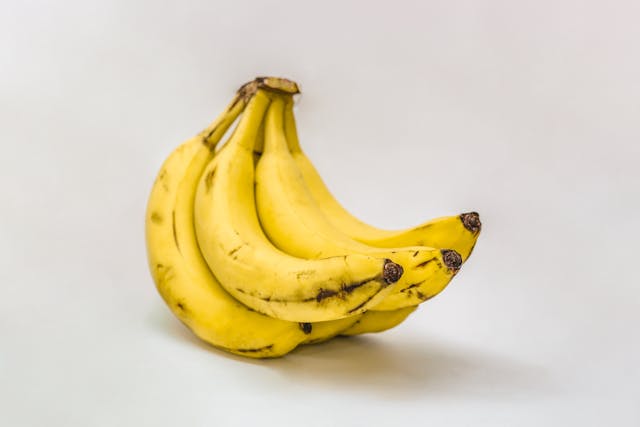
Bananas are arguably the world’s most popular fruit. They are nature’s pre-packaged energy bar, a staple in smoothies, and a go-to snack for athletes. But when you are tracking macros or counting calories, “one banana” can be a vague unit of measurement. How big is the banana? How ripe is it? And what happens if you eat three, five, or even ten of them?
This comprehensive guide breaks down banana calories and banana protein in a question-and-answer format. We will explore the nutritional value of bananas, analyze the caloric impact of consuming multiple bananas, and dive deep into the Nutrition Facts that make this fruit a dietary powerhouse.
Bananas are nutrient-dense fruits composed primarily of carbohydrates and water. They are low in protein and virtually fat-free.
Beyond banana calories, they are celebrated for their micronutrient profile. A standard medium banana is a rich source of potassium, which is vital for heart health and blood pressure regulation. It also provides significant amounts of Vitamin B6 (essential for brain development and function), Vitamin C (for immunity), magnesium, and dietary fiber.
According to USDA data, the Nutrition Facts for a medium-sized banana (approximately 118 grams) are as follows:
The source of banana fruit calories changes as the banana ripens.
In an unripe green banana, the carbohydrates are mostly resistant starch. Resistant starch functions like fiber; it resists digestion and feeds healthy gut bacteria. As the banana ripens and turns yellow (and eventually spotted brown), enzymes convert this starch into simple sugars (glucose, fructose, and sucrose). While the total calorie count remains relatively stable during ripening, the glycemic index rises, meaning the energy becomes more immediately available to the body.
In this section, we calculate the energy content for an increasing number of bananas. These calculations are based on the standard “medium” banana (approx. 105 calories).
1 banana calories equate to approximately 105 calories.This amount of energy is roughly equivalent to a medium apple or a slice of buttered toast. For most people, calories in a single banana represent a perfect snack size—enough to curb hunger without disrupting a daily caloric deficit. If your banana is “Extra Large” (9 inches or longer), the count is closer to 135 calories. If it is “Small” (6-7 inches), it is around 90 calories.
2 banana calories total approximately 210 calories. Eating two bananas moves you from “snack” territory into “mini-meal” territory. This provides about 54 grams of carbohydrates. Endurance athletes often consume two bananas about 60 to 90 minutes before a long run or intense workout to top off glycogen stores. The 210 calories derived here are almost entirely from fast-acting carbs, making them excellent fuel for high-output activities.
3 banana calories total approximately 315 calories. Three bananas constitute a substantial caloric load, roughly equivalent to a small cheeseburger or a bowl of cereal with milk. In the context of a smoothie, adding three bananas ensures a very thick, creamy texture and a high sugar content (roughly 42 grams of sugar). For someone sedentary, 315 calories of mostly sugar might be excessive for a single sitting, but for a “hard gainer” trying to build muscle, this is an easy way to pack in energy.
4 banana calories total approximately 420 calories. At this volume, you are consuming over 100 grams of carbohydrates. This is often seen in “gainer” shakes or specific high-carb vegan diets. 420 calories is a full meal’s worth of energy for many people on a diet. If you are eating four bananas in one sitting, you are getting a massive dose of potassium (over 1600mg), which is excellent for preventing cramping but demands that you drink plenty of water to process the fiber load (about 12 grams).
5 banana calories total approximately 525 calories. Five bananas provide over half of the daily carbohydrate requirement for an average adult. In the “Raw Till 4” or “80/10/10” diet communities, meals consisting of 5+ bananas are not uncommon (“mono-meals”). However, for the average person, 525 calories of fruit in one sitting can cause a significant blood sugar spike unless buffered by fats or proteins, which bananas lack.
6 banana calories total approximately 630 calories. To put this in perspective, 630 calories is more than a Big Mac. Eating six bananas provides nearly 19 grams of fiber, which is close to the total daily recommended intake for women (25g). While the caloric density is high, the volume of food is also massive. It is physically difficult for many people to eat six whole bananas due to the fiber and water content, making it a self-limiting binge food compared to processed snacks.
7 banana calories total approximately 735 calories. Consuming seven bananas delivers nearly 200 grams of carbohydrates. This level of intake is typically reserved for ultra-endurance athletes (like cyclists during a 100-mile ride) who need 60-90g of carbs per hour. For the general population, 735 calories from fruit alone is a significant portion of a 2000-calorie daily budget (over 35%) and leaves little room for essential fats and proteins.
8 banana calories total approximately 840 calories. At 840 calories, you are approaching the daily calorie limit for some aggressive weight-loss diets (though those diets are not recommended). This volume of bananas provides roughly 3300 mg of potassium.
While potassium is healthy, extreme intakes (hyperkalemia) can be dangerous for individuals with kidney issues, though a healthy person with functioning kidneys can generally handle this load.
9 banana calories total approximately 945 calories. Eating nine bananas brings you close to the 1000-calorie mark.
This provides about 120 grams of sugar. While natural fruit sugar (fructose bound with fiber) is healthier than high-fructose corn syrup, 120 grams is still a heavy metabolic load for the liver to process at once. This amount is rarely consumed outside of blender smoothies or specific fruit-based dietary challenges.
10 banana calories total approximately 1050 calories.
Eating 10 bananas is the famous “30 Bananas a Day” breakfast challenge baseline. It provides over 1000 calories, 270 grams of carbs, and 31 grams of fiber. While it is physically possible, it is nutritionally unbalanced for a single meal, lacking essential fatty acids and sodium. However, it demonstrates that even “low calorie” foods can add up to a surplus if volume is ignored.
Bananas are not typically considered a protein source. They are only about 4% protein by calorie composition.However, the protein adds up as volume increases.
1 banana protein content is approximately 1.3 grams.
This is a negligible amount for muscle building. To put it in context, you would need to eat nearly 20 bananas to equal the protein in one scoop of whey powder or a small chicken breast.
2 banana protein content is approximately 2.6 grams. This is still very low. If you are eating bananas post-workout, the 2.6g of protein is insufficient for muscle repair. You must pair the bananas with a protein source like Greek yogurt, peanut butter, or a protein shake to create a balanced recovery meal.
3 banana protein content is approximately 3.9 grams. You are now approaching the protein amount found in a very small egg white. While bananas contain all nine essential amino acids (histidine, isoleucine, leucine, etc.), they are present in such small quantities that bananas cannot be relied upon as a primary protein source.
4 banana protein content is approximately 5.2 grams. Five grams of protein is roughly equivalent to a handful of spinach or a tablespoon of peanut butter. Interestingly, the protein in bananas includes tryptophan, an amino acid that the body converts to serotonin, which can help promote relaxation and mood stability.
5 banana protein content is approximately 6.5 grams. At this level, you have matched the protein content of one large egg (approx. 6g). However, to get this 6.5g of protein, you have consumed 525 calories of bananas, whereas an egg provides that protein for only 70 calories. This illustrates why bananas are a poor “protein-per-calorie” investment.
6 banana protein content is approximately 7.8 grams. This is approaching the protein count of a cup of milk (8g). For vegans relying on fruit for calories, this incidental protein contributes to the daily total, but it lacks the density required for anabolic growth without supplementation from legumes or grains.
7 banana protein content is approximately 9.1 grams. You are approaching the 10-gram mark. While 9g of protein is helpful, the 190 grams of carbs that come with it make this a very skewed macronutrient ratio (approx 20:1 carbs to protein).
8 banana protein content is approximately 10.4 grams. Hitting double digits in protein! However, the caloric cost is 840 kcal. A bodybuilder would need to eat roughly 150 bananas to hit a daily target of 200g protein—an impossible feat. This highlights the necessity of dietary diversity.
9 banana protein content is approximately 11.7 grams. This amount of protein helps support the enzymatic functions required to digest the massive carbohydrate load you are ingesting. However, it is not enough to slow down the digestion of the sugar significantly.
10 banana protein content is approximately 13 grams
Thirteen grams of protein is a respectable amount—roughly equal to two ounces of meat. However, it comes packaged with over 1000 calories.If you are eating 10 bananas, you are getting protein, but you are primarily fueling your body with glycogen.
No single food is inherently “fattening.” Weight gain occurs when you consume more total calories than you burn. Banana calories are primarily carbohydrates, which are efficiently used by the body for energy. Because bananas are rich in fiber and have a high water content, they are actually quite satiating (filling). A study from the USDA suggests that increasing fruit and vegetable intake is linked to weight loss, not gain. The “fattening” reputation comes from their carb count, but unless you are on a strict Keto diet, bananas are weight-loss friendly.
A medium banana (105 cal) is more calorie-dense than water-heavy fruits like berries or melon, but similar to other dense fruits.
This is a common myth. The total caloric content does not change significantly as a banana ripens.
A green banana and a spotted brown banana of the same weight have roughly the same number of calories. The difference lies in digestibility. The green banana is high in resistant starch (which acts like fiber and may yield slightly fewer usable calories because it isn’t fully digested), while the yellow banana is high in sugar.However, for the purpose of counting calories in a single banana, you should treat them as the same number (approx 105).
You might see Nutrition Facts labels listing a banana as 90 calories or 120 calories. This discrepancy is almost always due to size classification.
The sugar in bananas is naturally occurring fructose, packaged with fiber, water, and essential micronutrients. This is fundamentally different from added sugars (like high fructose corn syrup) found in soda or candy. The fiber in the banana slows down the absorption of the sugar, preventing the drastic insulin spikes associated with processed sweets. However, people with diabetes should monitor their intake, perhaps limiting themselves to 1 banana calories per sitting and choosing greener bananas for a lower glycemic response.
To burn the approximately 105 calories found in one medium banana, an average 150lb person would need to:
Since banana protein is low (1.3g per fruit) and lacks a complete amino acid profile in high enough ratios, you should pair bananas with protein-rich foods. Excellent combinations include:
The calories in a single banana change if the banana is processed or cooked. Here is how preparation affects the density:
Banana Chips are significantly more calorie-dense than fresh fruit. This is because they are dehydrated (water removed) and often fried in oil or coated in syrup.
Mashing a banana does not change its calorie count, but it changes how much you can fit in a cup.
Freezing a banana preserves its nutrients but does not alter the calorie count. One frozen medium banana still has roughly 105 calories.
Frozen bananas are popular for making “nice cream” (blended frozen bananas), which is a low-calorie alternative to dairy ice cream.
Understanding banana calories is about more than just a single number. While the standard answer for calories in a single banana is 105, the context matters. Whether you are eating 2 banana calories for a pre-workout boost or limiting yourself to 1 banana protein intake as part of a balanced breakfast, this fruit offers high nutritional return on investment.
Bananas are a powerhouse of energy. They provide the carbohydrates necessary for brain function and physical activity, wrapped in biodegradable packaging. While they are not a significant source of banana protein, they pair perfectly with protein-rich foods to create balanced meals.
For weight management, stick to 1 to 2 bananas a day to reap the benefits of potassium and fiber without overloading on sugar. For athletes and those with high caloric needs, scaling up to 3, 4, or even 5 bananas provides clean, easily digestible fuel that processed sports bars simply cannot match.
By keeping these counts in mind—from the 105 calories in one banana to the 1050 calories in ten—you can make informed decisions that align with your health and fitness goals.